
Box Elder Criminal Docket Searches
Utah Courts Xchange is the main public search tool. It covers District and Justice Court case histories in Box Elder County. Pull the case number if you can. If you only have a name, add Box Elder County, a court level, a case type, and a tight date span. Each Search click costs money, and no result set goes past 500 records. The narrower your filters, the lower the cost and the fewer wrong matches.
Know the full access chain, too. Every Utah courthouse offers free public terminals. For District felony and Class A matters, call the Brigham City District clerk at 435-734-4600. For county misdemeanors, infractions, and citations, the Box Elder County Justice clerk is at 435-734-3390. Written requests, mail, counter inspection, phone contact, and archives still work. Turn to them when the online history comes up short.
- Select District Court, Justice Court, or both.
- Choose Box Elder County or the exact court.
- Enter the case number, citation, or filtered name.
- Verify court, type, filing date, and party role.
- Read proceedings and each charge outcome separately.
- Ask the clerk for an official copy when needed.
Box Elder Criminal Search Fields
The Xchange controls you choose shape the search record itself. A case number is usually the best key. Even then, check the location field, because the same number pattern can cross courts. A citation number works well for citation-filed Justice cases. The date panel lets you search filing, disposition, judgment, or satisfied-judgment dates. Pick the wrong date type. You can bury the very docket you need that way.
| Control | Use | Trap |
|---|---|---|
| Jurisdiction | District, Justice, or both | One court can miss the other |
| Scope | County or named court | City is not proof of venue |
| Case type | Narrow a known family | A tight code can hide results |
| Judgments only | Locate judgment activity | Not a full history search |
The official case-code list appears in this captured view.
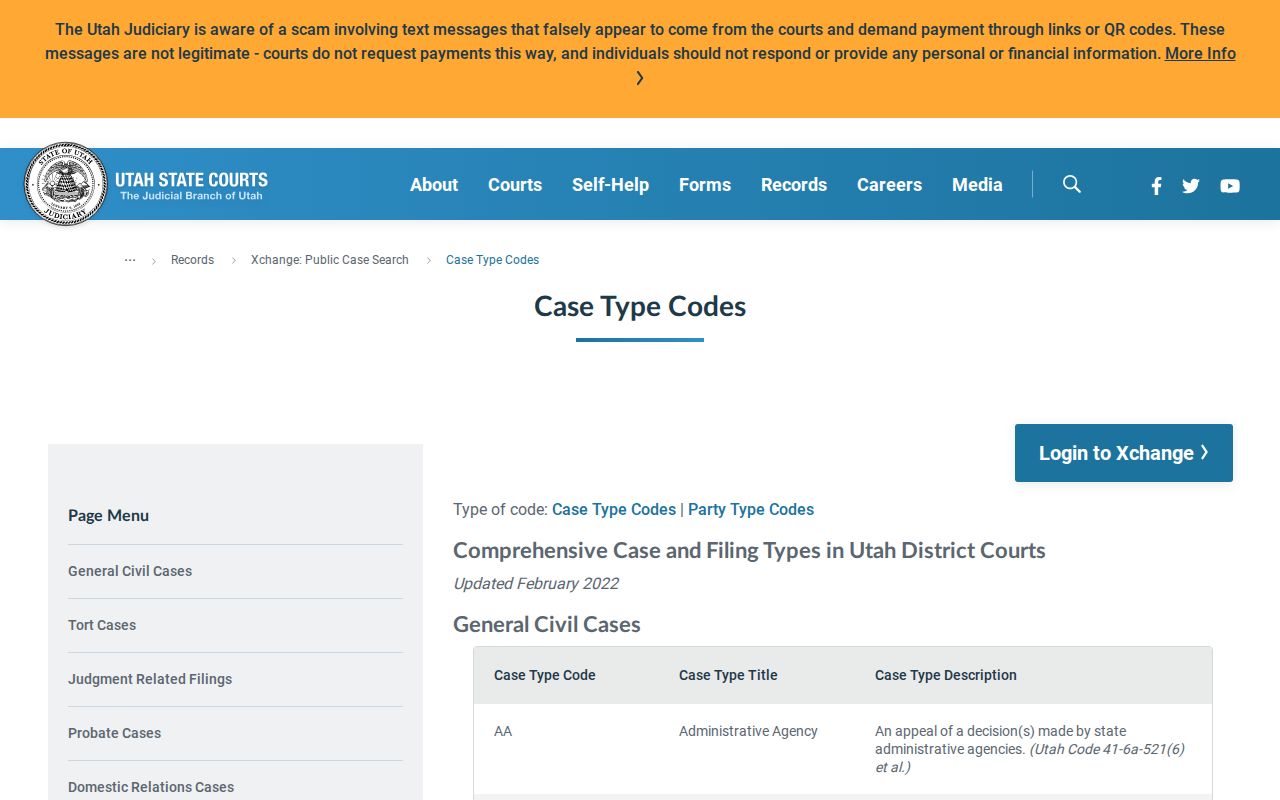
The image shows why a code should be saved with its complete description.
Criminal Dockets: What They Show
An opened Box Elder County criminal docket can carry a lot of detail. Expect court, location, case number, type, caption, and roles. Judge, attorneys, charges, level, plea, disposition, proceedings, hearings, judgments, and the public financial fields may appear too. Documents and compliance dates may show up as well. Some identifiers can be visible in the case record. You don't need to copy them just to explain a public case history.
| Case number | A Utah case number, checked with its court location. |
|---|---|
| Charge block | Alleged count, statute, degree or class, plea, and outcome. |
| Proceedings | Dated filings, notices, settings, resets, motions, and orders. |
| Hearings | Date, type, judge, location, and remote detail if supplied. |
| Disposition | The recorded result and date, which may vary by count. |
Utah Courts' case-history help displays the official field layout.
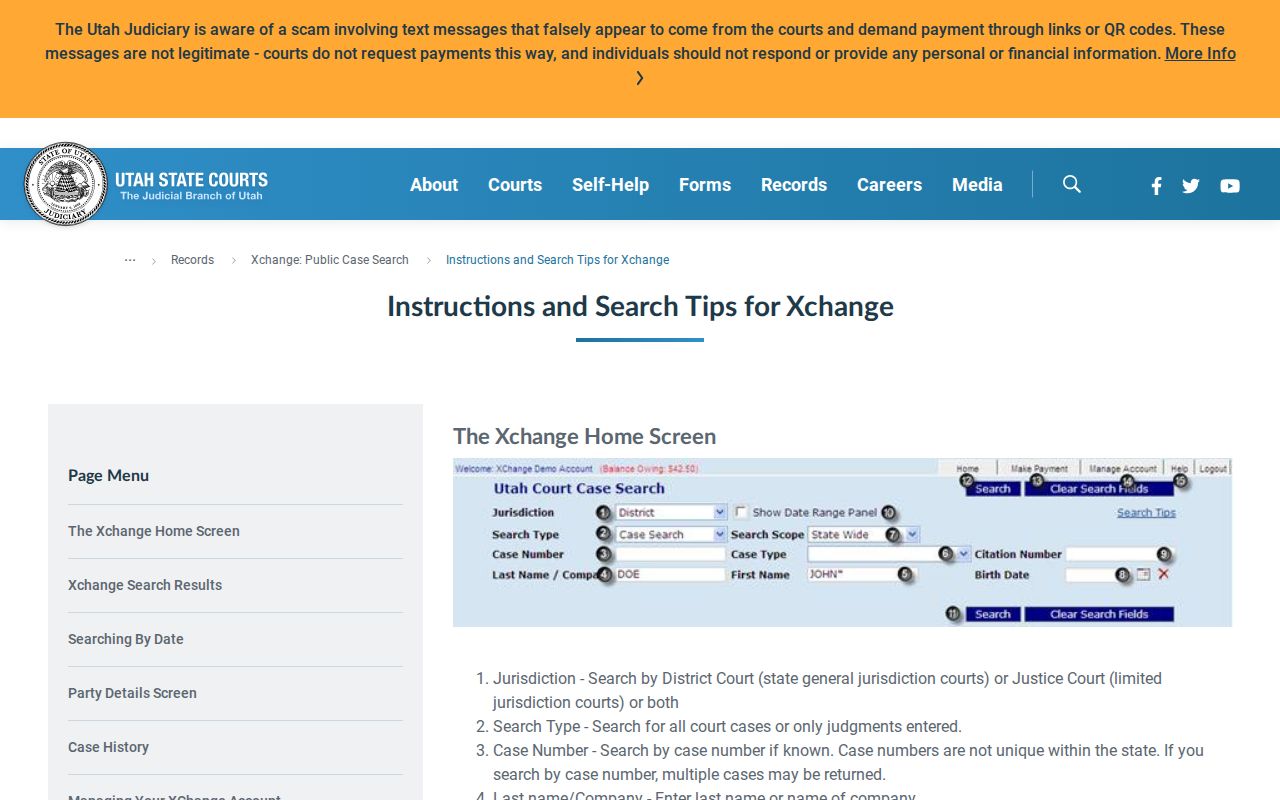
That layout helps separate an allegation from a later plea or outcome.
Box Elder Charges and Outcomes
A charge line is not a finding of guilt. Labels like “Filed,” “set,” “continued,” and “pending” describe process, not outcomes. One Box Elder County criminal docket can hold several counts. Each carries its own plea or disposition. Read every row and date before you say what the court recorded.
- Disposition
- The recorded outcome, such as dismissal, acquittal, or conviction.
- Plea in abeyance
- A plea held under stated terms; it is not expungement.
- Reset
- A setting moved to a later date, not a dismissal.
- Bond event
- An action about release security, not a final result.
Utah's own help text describes the fields but promises no single universal abbreviation list. Keep the exact label as written. If a code looks unfamiliar, confirm it with the court instead of expanding it from memory.
Criminal Case Stages on Docket
Box Elder County criminal cases do not all travel one road. Still, docket entries tend to follow a known sequence. A case may begin with a citation, summons, or information. Filing, first appearance or arraignment, and plea can follow. So can pretrial work, trial or another evidentiary hearing, judgment, sentence, compliance, and finally appeal or closure.
Docket flow: Filing → Arraignment → Pretrial → Plea or Trial → Disposition → Sentencing
Between those stages, the docket may show notices, amended charges, warrants, bond events, and continuances. Never assume a step is missing. The Utah court calendar confirms current settings, while the docket keeps the fuller history.
Box Elder Criminal Docket Volume
The judiciary's FY2023 report for Box Elder District gives a sense of scale. It says nothing about any single case. It counted 337 State Felony filings, 230 other misdemeanor filings, 80 misdemeanor DUI filings, and 45 uncategorized criminal entries. Together that is 692 criminal filings and 475 dispositions.
Count workload, not people. These totals say nothing about convictions or open cases. A fiscal-year disposition may close out a filing from an earlier year, so a current Box Elder County criminal docket search is still the only way to check one case.
Box Elder Criminal Docket Courts
The county court-information page sends felonies and Class A misdemeanors to District Court. Class B and C misdemeanors, infractions, and many citation matters go to Justice Court. The division tells you where to search. It says nothing about guilt.
| Venue | Scope | Access |
|---|---|---|
| First District, Brigham City | Felonies and Class A | Xchange, terminal, clerk |
| County Justice | Class B/C, infractions, citations | Xchange and county clerk |
| Tremonton or Willard Justice | Qualifying city cases | Xchange and city clerk |
| Juvenile Court | Specified youth matters | Restricted route |
A Justice Court appeal lands in the same county's District Court. Under Criminal Procedure Rule 38, notice is generally due within 28 days.
Box Elder Docket Filing Systems
Utah Courts eFile and eFlex accept filings, but neither is the public index. Attorneys and registered users file through that program or through certified providers. The public side works differently. Staff enter case data in CORIS. Open history then becomes searchable through Xchange. The official eFile/eFlex login shows the filer entry point.
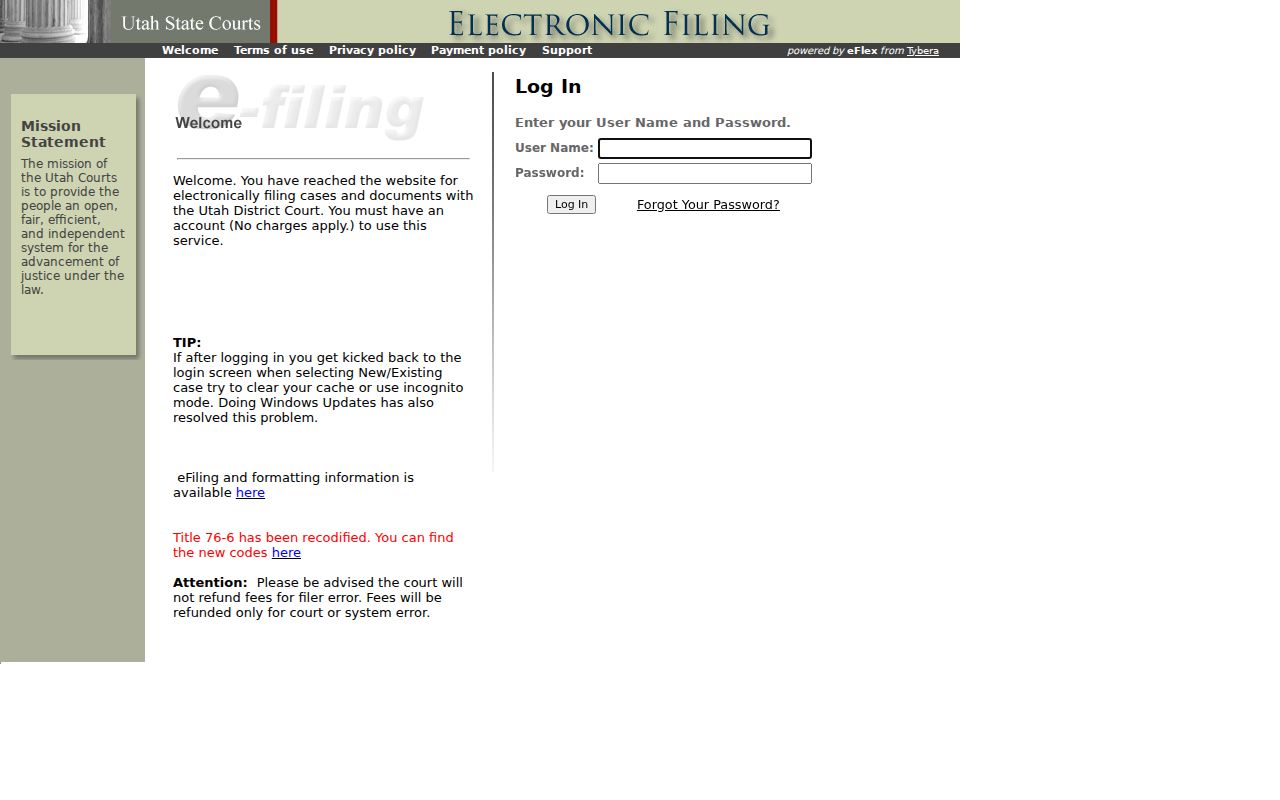
The login makes the filing-versus-search distinction plain, and the First Judicial District page supplies local orders and court material.
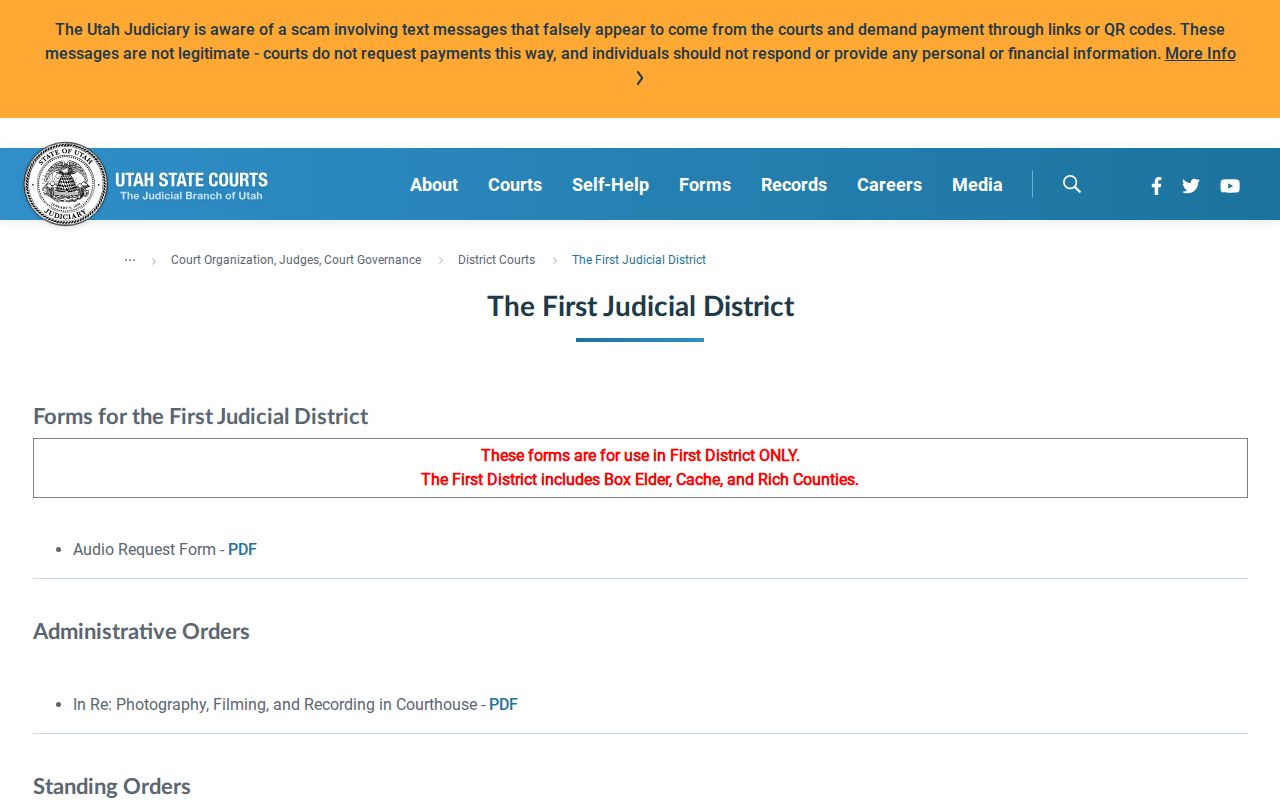
It is the official district source for Brigham City's broad criminal jurisdiction.
Access Rules for Criminal Dockets
Utah court records are presumed public unless a law, rule, or order says otherwise. Xchange leaves out sealed and expunged cases. Juvenile delinquency, child-welfare, termination, adoption, and civil-commitment matters sit outside ordinary public Xchange searches. A missing result means only one thing. The case is not in that public layer.
Key rules:
UCJA 4-202.02 classifies court records.
UCJA 4-202.03 defines who may access each class.
UCJA 4-202.04 provides the written clerk-request route.
Sometimes the docket is public but a charging paper or judgment image is not. Use the clerk's record request process for those. Xchange public documents cost $1 each. Older cases may need a CORIS or archive check.
Missing Box Elder Criminal Records
First check jurisdiction, county, date type, spelling, and code. Then test the other plausible Utah venue. A District-only query misses Justice cases, a broad one can hit the 500-record cap, and a judgment-only search skips the intermediate history.
If the case still does not appear: call the record-holding clerk, ask about older CORIS data and archives, and save the source and search date. Say “not located in the public search,” not “no case exists.”
Which court the entry names decides your next move. The county label alone will not pull First District, county Justice, Tremonton Justice, and Willard Justice files into one clerk drawer. Each is a separate docket. So when you call or visit, give staff the case number, citation number, filing year, and court location. That helps them find the criminal record. Older files raise another question. Does the history still sit at the courthouse, was it converted into CORIS, or was it sent to an archive? If a docket entry shows no attached image, put the exact charging instrument, order, judgment, or date in your written request. That detail tells the clerk whether you want an ordinary copy or a certified record.
Parties with their own case can use MyCourtCase after identity checks. It is no anonymous Xchange stand-in. Certified copies come from the clerk, never from a screen capture.